

Smart Tangibles News Digest #2609
- Yoel Frischoff
- 8 hours ago
- 11 min read
March 2, 2026
Global smart tangibles news from around the world - connected hardware, IoT infrastructure, edge intelligence, standards, and the business models behind long-lived products.

This week, digital twins gain physics-based AI brains, regulation arrives at hardware teams' doorstep, and the smart home camera finally gets a standards-based foundation.
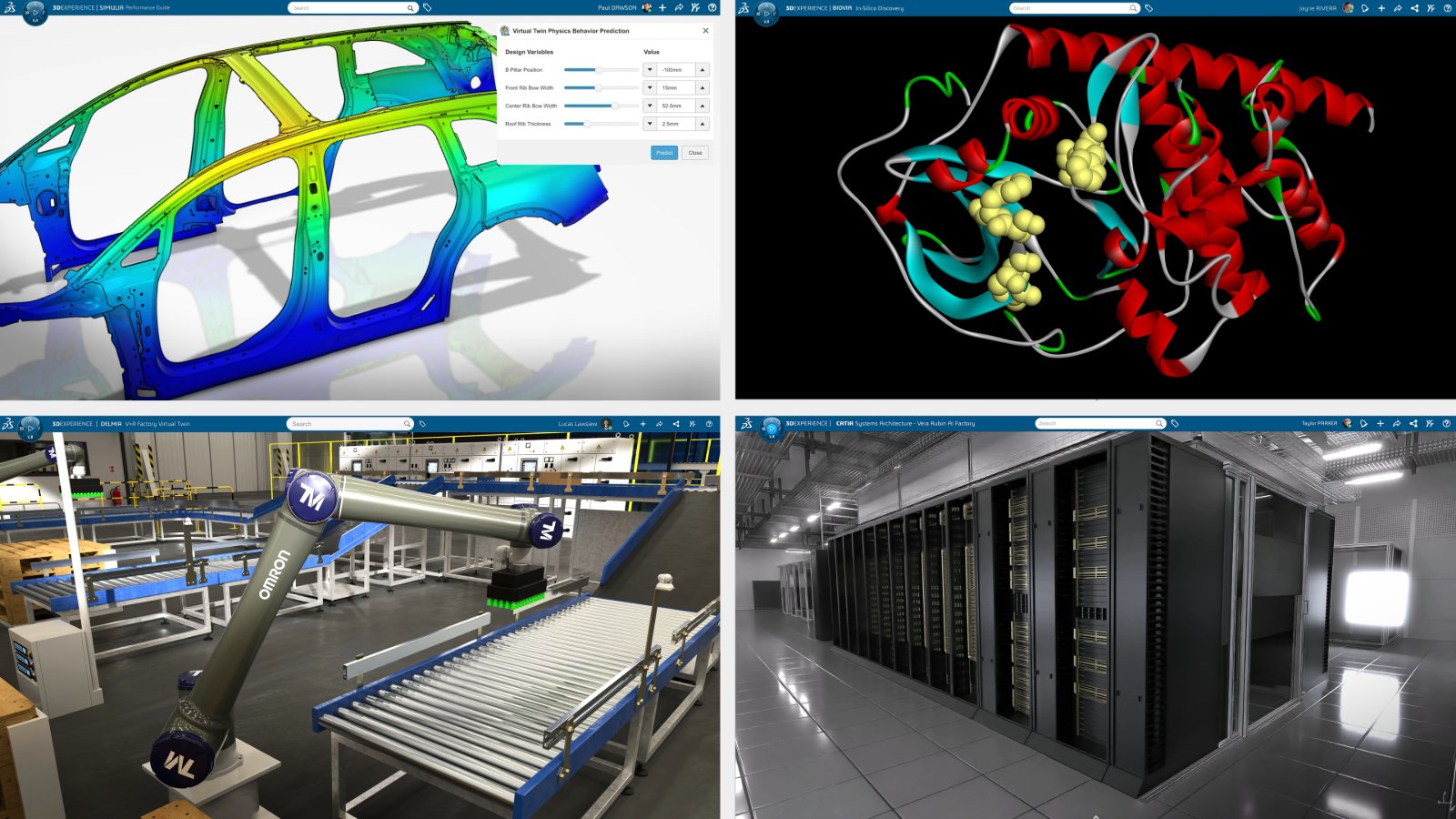
NVIDIA and Dassault Systémes announced a partnership to merge virtual twins with industrial AI and deploy AI factories across three continents.
The EU Cyber Resilience Act's first enforcement phase – mandatory vulnerability reporting – is now six months away, and major law firms are publishing detailed compliance guidance for hardware manufacturers.
Meanwhile, Matter 1.5 cameras are set to ship in March, Synaptics is bringing AI native processing down into cost sensitive MCUs, and Qualcomm’s string of five developer-focused acquisitions shows that controlling the entire prototype to production toolchain is emerging as the key competitive moat.
Cross-Cutting Signals
Digital twins are becoming AI-native simulation engines - NVIDIA and Dassault Systémes are building physics-validated "world models" that move digital twins from passive replicas to active AI systems that predict, test, and optimize before anything ships.
Regulation is forcing security into the product development lifecycle - The EU Cyber Resilience Act's September 2026 reporting deadline means hardware makers must embed vulnerability management and SBOMs into standard engineering workflows, not treat them as afterthoughts.
Edge AI is pushing down from industrial boards to commodity MCUs - Synaptics and Qualcomm are both extending AI inference capabilities to the cost and power envelopes where most IoT devices actually live, making on-device intelligence accessible beyond premium applications.
Standards-based interoperability is expanding into new device categories - Matter 1.5 adding cameras with WebRTC streaming and Samsung's first-mover platform support signals that the protocol is moving from lighting and sensors into high-value, high-data device types.
This Week at a Glance
A quick scan of partnerships, regulation, standards, and silicon developments that matter for smart tangibles this week.
NVIDIA and Dassault Systèmes build shared industrial AI architecture. The partnership merges Dassault's virtual twin platforms with NVIDIA's accelerated computing to create physics-validated "world models" for manufacturing and engineering, backed by sovereign cloud AI factories on three continents.
EU Cyber Resilience Act first enforcement phase hits in six months. Starting September 11, 2026, all manufacturers of products with digital elements sold in the EU must report actively exploited vulnerabilities to ENISA within 24 hours - even for legacy products already on the market.

Matter 1.5 brings cameras into the interoperability standard. Samsung SmartThings becomes the first platform to support Matter-compatible cameras with WebRTC-based encrypted streaming, while Aqara, Eve, and XThings prepare to ship the first hardware starting this month.

Synaptics pushes AI-native processing to cost-sensitive IoT price points. The new Astra SR series MCUs bring AI-accelerated multimodal sensing to battery-powered sensors and low-cost smart devices, with samples shipping now and general availability planned for Q2 2026.

Qualcomm assembles a full prototype-to-production edge AI stack. Five acquisitions - Arduino, Edge Impulse, Foundries.io, Augentix, and Focus.AI - give Qualcomm an integrated developer pipeline from embedded prototyping through model training to fleet management and OTA updates.

News In Detail
1. NVIDIA and Dassault Systèmes Partner to Build Industrial AI Platform for Virtual Twins
The two companies are creating a shared architecture for physics-validated "industry world models" – AI systems grounded in real physics that can serve as mission-critical platforms for manufacturing, materials science, and engineering.
Announced February 3, the partnership brings NVIDIA's accelerated computing and AI libraries together with Dassault Systèmes' virtual twin platforms to push more engineering work into real-time digital workflows. The goal is not another visualization layer. It is building AI systems trained on actual physical laws that can predict, simulate, and validate before physical prototypes exist. Jensen Huang called it "the next frontier of artificial intelligence, grounded in the laws of the physical world."
The infrastructure commitment is concrete: Dassault Systemes is deploying NVIDIA-powered AI factories on three continents through its OUTSCALE sovereign cloud, letting customers run AI workloads while keeping data residency and security requirements intact. That sovereign cloud element matters for industrial customers in regulated sectors - aerospace, automotive, pharma – who need simulation capability but cannot send proprietary engineering data to third-party cloud providers.
For smart tangibles product teams, this partnership signals where digital twins are heading: from monitoring dashboards into AI-powered design and validation tools that can model a product's behavior before hardware exists. Teams already investing in simulation and digital twin infrastructure will find new capabilities arriving. Those still treating digital twins as nothing but shiny 3D visualizations will face a widening gap as competitors use physics-based AI to compress design cycles, reduce prototype costs, and validate product behavior at speeds that physical testing cannot match.
Signals to Watch
First industry verticals to deploy NVIDIA/Dassault AI factories through OUTSCALE and the use cases they prioritize.
Competing responses from Siemens Xcelerator and PTC, both of which have their own digital twin platforms and AI partnerships.
Pricing and access models - whether this remains enterprise-only or trickles down to mid-market hardware companies.
Integration with edge and IoT data pipelines that feed real-world operational data back into the virtual twin loop.
Key Links
2. EU Cyber Resilience Act (CRA): September 2026 Reporting Deadline Closes In on Hardware Makers
The EU's first enforcement phase for connected product security takes effect in six months, requiring manufacturers to report actively exploited vulnerabilities within 24 hours – and most hardware teams are not ready.
DLA Piper published detailed compliance guidance on February 19, laying out what manufacturers of "products with digital elements" – from smart appliances and industrial IoT devices to mobile apps and operating systems – must do before September 11, 2026. From that date, any manufacturer selling into the EU must report actively exploited vulnerabilities to ENISA and national CSIRTs within 24 hours of discovery, followed by a full report within 72 hours and a final mitigation update within 14 days. This applies even to legacy products already on the market.
The practical requirement is clear: without Software Bills of Materials (SBOMs) and a functioning vulnerability management process in place before September 2026, compliance is impossible. The CRA does not ask manufacturers to prevent all vulnerabilities. It requires knowledge of what is in their products, detect when components are being exploited, and report it quickly. Hardware companies that have historically treated firmware as a ship-and-forget artifact, face a structural change to how products are managed post-sale. Conformity assessment bodies begin evaluations on June 11, 2026, adding another deadline ahead of the September reporting requirement.
For IoT product teams, the CRA turns security lifecycle management from a nice-to-have into a market access requirement for the EU. Teams shipping connected hardware into European markets need SBOM generation integrated into their build pipelines, vulnerability monitoring services tracking their component dependencies, and incident response playbooks that can meet the 24-hour notification window. Full product conformity obligations follow in December 2027, but the September 2026 reporting phase is where enforcement begins.
Signals to Watch
Volume of manufacturer registrations and SBOM submissions to ENISA's reporting platform as the September deadline approaches.
Tooling vendors (ONEKEY, Finite State, Cybeats) gaining traction as hardware companies rush to automate SBOM generation and vulnerability tracking.
First enforcement actions or public disclosures under the reporting obligation after September 2026.
Whether U.S. and Asian hardware exporters treat CRA compliance as an EU-only cost or adopt the practices globally.
Key Links
3. Matter 1.5 Cameras Begin Shipping: Smart Home Standard Enters High-Value Device Territory
Samsung SmartThings becomes the first platform to support Matter 1.5 cameras as Aqara, Eve, and XThings prepare to ship the first Matter-compatible camera hardware starting March 2026.
Matter 1.5 adds cameras as a new device type with live video streaming, two-way audio, motion detection, event history, and pan-tilt-zoom controls, all transmitted over WebRTC for encrypted audio and video data streams. Samsung's SmartThings platform now supports 58 Matter device types through the 1.5 specification, and the company has worked directly with Aqara, Eve, and XThings to develop the first Matter camera products. Aqara's initial Matter camera is expected in the first half of 2026.
Cameras represent the first high-bandwidth, high-value device category to get Matter support. Previous Matter device types - lights, switches, sensors, locks - are relatively simple in data terms. Cameras introduce continuous video streams, which stress test both the protocol and the local network infrastructure. The WebRTC streaming foundation adds a practical advantage: it is a well-established, encrypted, peer-to-peer technology that keeps video data local rather than routing through cloud servers. For privacy-conscious consumers and enterprise buyers, that architecture is a selling point.
For smart tangibles product teams building connected cameras or video-enabled devices, Matter 1.5 changes the competitive math. Previously, camera manufacturers had to choose between proprietary ecosystems (Ring/Amazon, Nest/Google, HomeKit/Apple) or build their own cloud infrastructure.
Matter cameras can now work across platforms with a single firmware implementation. That lowers the barrier to entry for smaller hardware companies but also means differentiation shifts from platform lock-in to image quality, on-device AI features, and the quality of the local streaming experience.
Signals to Watch
Consumer reviews and reliability reports from the first Aqara and Eve Matter cameras, particularly around cross-platform streaming quality.
Whether Apple (via HomePod/Apple TV hubs), Google Home, and Amazon Alexa add Matter 1.5 camera support - SmartThings has a head start.
Whether Matter 1.5 camera adoption pressures existing proprietary camera ecosystems to open up or accelerate their own interoperability.
Next device categories in the Matter pipeline – EV chargers, appliances, and energy management are all expected.
Key Links
4. Synaptics Expands Astra AI-Native MCU Line to Power and Cost-Sensitive Edge IoT
Synaptics extends its Astra platform with SR series MCUs that bring AI-accelerated multimodal sensing to the price and power points where most IoT devices actually operate.
The Astra SR100 series – including the SR110, SR105, and SR102 – delivers AI-accelerated performance combined with ultra-low-power multimodal sensing across industrial, consumer, enterprise, and automotive applications. Samples are shipping now with general availability planned for Q2 2026.
Synaptics will showcase the expanded portfolio at Embedded World 2026 in Nuremberg (March 10-12), including demonstrations of how its compute and wireless solutions enable scalable edge AI deployments. The company is also previewing a new wireless solution that combines AI-native compute with connectivity in a single platform.
The strategic angle is accessibility. Previous edge AI silicon - including the chips covered in recent digests from ST, Microchip, Infineon, and others - has primarily targeted industrial, automotive, or premium consumer applications. The Astra SR series pushes AI inference down to the cost and power budgets where the volume IoT market lives: battery-powered sensors, wireless endpoints, and low-cost smart devices. When AI processing becomes available at these price points, product teams can add features like keyword detection, anomaly sensing, and gesture recognition without redesigning power systems or jumping to more expensive processor families.
For smart tangibles teams, the expanding availability of AI-capable MCUs at every price tier reinforces a planning assumption: on-device intelligence is becoming a standard feature, not a premium differentiator. The competitive advantage shifts from "can your device run AI" to "how well does your software stack manage AI models across product variants, firmware versions, and field updates over a multi-year lifecycle." Teams that build model management and OTA pipelines now will be ready as this silicon reaches mass market adoption.
Signals to Watch
Embedded World 2026 announcements from competing MCU vendors (NXP, Nordic, Renesas) targeting the same cost/power-sensitive edge AI segment.
Developer adoption metrics for the Astra SR series, particularly in consumer and smart home applications versus industrial.
Whether Synaptics' combined compute-plus-wireless approach reduces BOM complexity enough to shift design wins from two-chip solutions.
Production deployment timelines from OEMs building on Astra SR samples, expected to surface in late 2026 product launches.
Key Links
5. Qualcomm Completes IE-IoT Platform Through Five Acquisitions: From Prototype to Production Under One Roof
Qualcomm has assembled a full developer-to-deployment pipeline for edge AI IoT through acquisitions of Arduino, Edge Impulse, Foundries.io, Augentix, and Focus.AI - a bet that owning the toolchain matters as much as owning the silicon.
Announced at CES 2026 in January, Qualcomm redefined its Intelligent Edge IoT (IE-IoT) business by integrating five acquired companies into a unified platform. Arduino brings the world's largest embedded prototyping community. Edge Impulse provides the leading TinyML development environment. Foundries.io delivers secure OTA updates and fleet management for Linux-based devices. Augentix and Focus.AI add computer vision and AI optimization capabilities. Combined with Qualcomm's Dragonwing processor line - including the new Q-8750 with 77 TOPS of on-device AI and the mid-range Q-7790 with 24 TOPS - this creates a stack that spans from first prototype on an Arduino board through model training on Edge Impulse to production fleet management on Foundries.io.
The strategic logic is clear: as edge AI becomes a standard MCU feature, the bottleneck shifts from silicon capability to developer productivity and lifecycle management. Qualcomm is betting that hardware companies will choose the platform that lets them move fastest from concept to shipping product, and that recurring revenue from fleet management and OTA services will supplement chip sales. The QAIPI 2026 incubation program in Japan, Singapore, and South Korea adds a startup cultivation layer on top.
Qualcomm's platform play raises a build-versus-buy question for the entire IoT development stack. If a single vendor offers prototyping tools, AI model development, production silicon, OTA updates, and fleet management as an integrated package, the cost of assembling a best-of-breed toolchain from separate vendors needs to deliver clear advantages to justify the integration overhead. Teams evaluating their 2027 hardware platforms should assess whether the convenience of an integrated stack outweighs the vendor lock-in risk that comes with it.
Signals to Watch
Developer migration rates to the integrated Qualcomm IE-IoT platform, particularly from teams currently using standalone Arduino, Edge Impulse, or Foundries.io.
Competing integrated platform plays from other silicon vendors - whether NXP, Infineon, or Silicon Labs pursue similar acquisition strategies.
Pricing structure for the Foundries.io fleet management and OTA services layer - whether Qualcomm bundles it with silicon purchases or charges separately.
First production deployments from QAIPI incubator startups, expected late 2026, as early indicators of the platform's real-world viability.
Key Links
From TheRoad / Smart Tangibles
Previous issue: Smart Tangibles News Digest #2608
Deep dive and case submissions: Smart Tangibles case study submission page - share real world examples of connected products, smart infrastructure, and service backed hardware.
Smart Tangibles book progress: The manuscript is incorporating new chapters on edge orchestration, domain specific IoT platforms (like smart retail), and security baselines for long lived devices.
How to Use This Digest
Treat these stories as prompts for roadmap reviews - where should your next generation hardware assume edge AI, higher security baselines, or Matter and Thread as default plumbing.
Use the “Signals to Watch” bullets as inputs to risk registers and opportunity maps, especially around lifecycle management, platform dependencies, and standards adoption.
Bring one story per week into cross functional discussions between product, hardware, security, and operations to stress test assumptions about stacks and partners.
For strategy and finance teams, map the market and standards trends here against your own unit economics and portfolio bets to see where assumptions are shifting under your feet.
If you find this useful, share it with a colleague or subscribe for future issues at theroadtlv.com.
This news digest is compiled weekly. Register here to receive it in your inbox.