

Smart Tangibles News Digest #2607
- Yoel Frischoff

- 17 hours ago
- 9 min read
February 16, 2026
Global smart tangibles news from around the world - connected hardware, IoT infrastructure, edge intelligence, standards, and the business models behind long-lived products.

This week’s theme looks at how Apple is finally switching off its legacy HomeKit stack, cheap Matter lighting is racing toward commodity pricing, big box retailers are shipping their own sensor suites, and industrial vendors are standardizing on modular NPUs for edge AI.
Together, these moves harden the baseline for what counts as a "connected product" in homes, factories, and infrastructure.
Once again, the scope is less about flashy new categories and more about invisible plumbing: who owns the home hub, who controls the update pipeline, and which vendors quietly become the default AI fabric at the edge. Those choices set the constraints for UX, subscriptions, and security over the next decade of smart tangibles.
Cross-Cutting Signals
Platform owners are raising the support floor
Apple's decision to retire the old HomeKit architecture and require newer OS versions and dedicated hubs shows how quickly baselines can move once ecosystems decide to cut legacy devices loose.
Sensors are becoming the primary UX surface
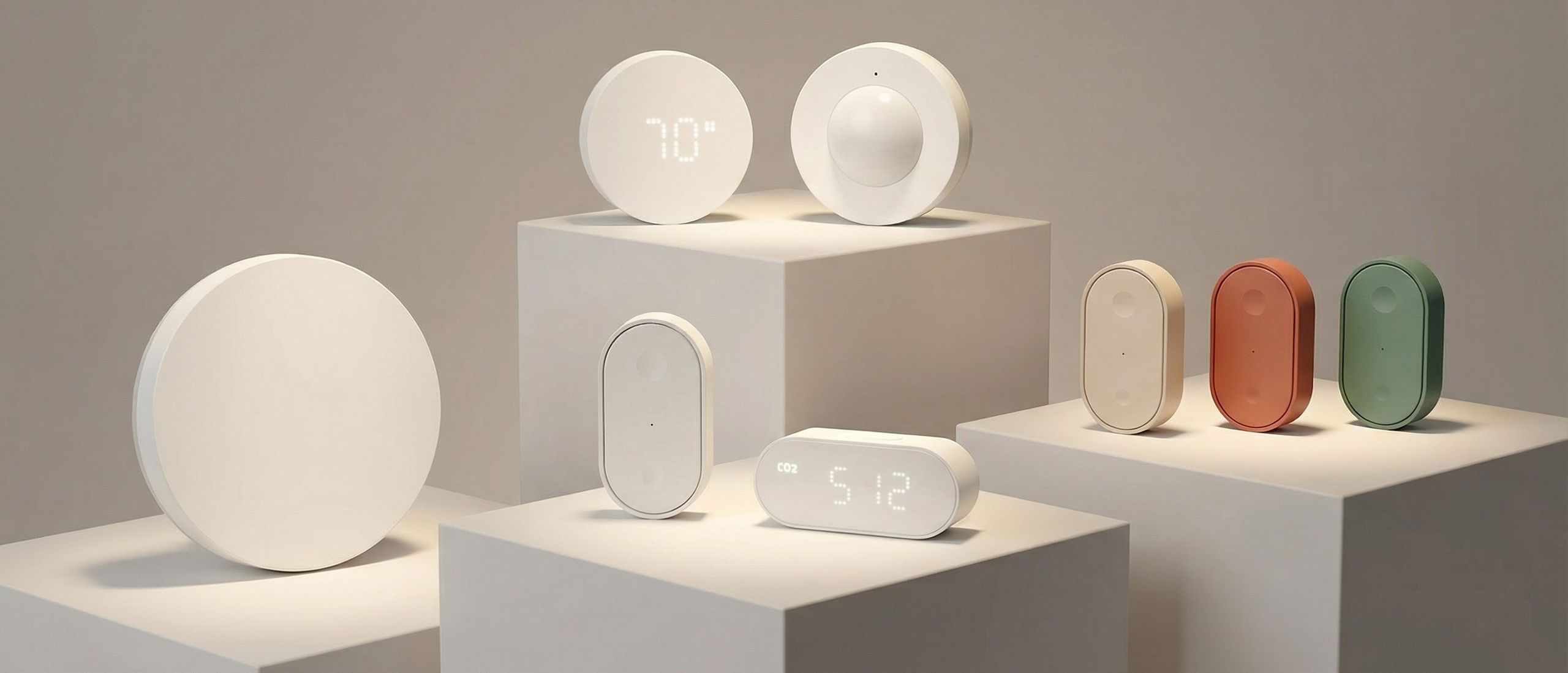
IKEA's new low cost sensor line turns temperature, motion, and air quality into everyday inputs, not specialist gear, pulling more "invisible automation" into mainstream homes.
Edge AI is becoming a modular component, not a bespoke design
Partnerships like Advantech and DEEPX, delivering M.2 NPU modules into industrial form factors, make AI acceleration something you slot into SKUs across portfolios.
Lifecycle infrastructure decides who can monetize AI features
Analyses of IoT in 2026 and OT security show that without dependable OTA, observability, and AI driven security, subscription models and "intelligent" features simply do not scale.
This Week at a Glance
Quick overview of what is shaping connected devices this week:
Apple retires legacy HomeKit architecture - As of February 10, Apple has ended support for its original HomeKit system, forcing users onto the newer Apple Home baseline and consolidating hub roles around HomePod and Apple TV. Device makers must now test against a narrower, more demanding environment.

Lifx's Matter bulbs hit 10 USD per lamp - Lifx's two pack of full color, Matter compatible Wi Fi bulbs is selling for 19.99 USD, putting interoperable, multi platform lighting in direct price competition with "dumb" LEDs and squeezing room for proprietary ecosystems.

Advantech and DEEPX make industrial edge AI modular - Advantech partners with Korean NPU specialist DEEPX to ship an M.2 NPU module delivering 25 TOPS of inference, extending its multi vendor accelerator portfolio so customers can swap AI engines without changing platforms.
Edge AI, OTA, and AI security become lifecycle requirements - Analyses from Mender and Nozomi Networks frame 2026 as the year when edge AI, reliable OTA, and AI powered cybersecurity become baseline requirements for serious IoT and OT deployments, not aspirational features.

News In Detail
1. Apple Retires Legacy HomeKit Architecture
Apple's shutdown of the old HomeKit architecture turns "optional upgrade" into a hard requirement, resetting which hubs and OS versions smart home products must support.
The Verge reports that as of February 10, 2026, Apple has ended support for its original HomeKit architecture. Users who have not migrated to the newer Home system risk breakage, particularly if they rely on an iPad as a home hub, since only HomePod and Apple TV now qualify for that role. Controllers must run at least iOS 16.2, macOS 13.1, or watchOS 9.2, and some homes will be upgraded automatically.
For device makers, "works with Apple Home" now implies a narrower and more demanding environment than generic "HomeKit compatible" labels from a few years ago. Testing matrices must assume newer OS baselines, dedicated hubs, and tighter integration with Matter. Install bases where an iPad quietly acted as the hub will suddenly reveal themselves through support tickets when automations stop firing.
Strategically, this is a reminder that smart home ecosystems can and will deprecate legacy paths once migration reaches critical mass. Vendors that still depend on older Apple stacks or assume informal hub roles risk silent failure. Those with strong telemetry and update paths will see and fix issues; others will simply ship more RMAs.
Signals to Watch
Change spikes in support cases and returns from users who relied on iPads as hubs or who have stalled OS upgrades.
Firmware and app updates that explicitly target the new Home architecture or improve Matter behavior under Apple's tightened requirements.
How aggressively Apple's marketing leans on Matter and Apple Home positioning now that the old system is gone.
Key Links
2. IKEA Launches Mass Market Smart Sensors from 6 USD
IKEA's new smart sensor range shows that rich sensing and simple control are finally being packaged for normal homes, not just hobbyist setups.
TechRadar highlights IKEA's new CES 2026 showcased line of smart sensors and controls, including the Timmerflotte temperature and humidity sensor and colorful Bilresa remotes. Prices start around 6 USD, with devices designed to be simple, battery powered accessories that talk to IKEA's Dirigera hub and integrate with Matter based ecosystems. The emphasis is on app optional control and guest friendly remotes rather than complex scenes buried in an app.
From a product strategy perspective, this is a signal that sensing is becoming part of every room's "basic kit" in middle market homes. When humidity and motion sensors are as common as light switches, the UX expectations for smart tangibles change: people start to expect rooms that adapt automatically, not just devices they can toggle from phones. That, in turn, raises the bar for reliability, battery life, and privacy friendly defaults.
For OEMs, IKEA's approach is instructive: focus on a tight roster of high leverage sensors and simple remotes, rely on Matter for broader ecosystem reach, and keep UX primitives legible to non enthusiasts. It also underscores competitive pressure on standalone sensor vendors whose value props are largely "we sell a sensor."
Signals to Watch
Stock levels and restock cadence for the new sensor line, which will hint at real demand beyond CES buzz.
How quickly IKEA exposes deeper Matter integrations, for example sensors that participate cleanly in Apple, Google, and Amazon automation UIs.
Whether other furniture and DIY retailers follow with "sensor kits" that bundle multiple form factors for whole home deployment.
Key Links
3. Lifx's Matter Bulbs Hit 10 USD per Lamp
Lifx's discounted two pack of Matter bulbs brings full color, multi platform smart lighting close to commodity LED pricing, squeezing room for proprietary ecosystems.
The Verge notes that Lifx's two pack of A19/E26 Wi Fi bulbs with Matter support is selling for 19.99 USD, or about 10 USD per bulb, significantly undercutting rival packs such as Philips Hue that still rely on proprietary bridges and cost several times more. The 800 lumen bulbs support full color and tunable white light and can be controlled via major platforms including Google Home, Alexa, Apple Home, SmartThings, or the Lifx app.
For smart tangible teams, this price point matters more than any spec sheet. When interoperable, bridge free lighting hits near commodity pricing, the premium you can charge for proprietary ecosystems shrinks drastically. Value must shift into differentiated UX, automations, or service layers, not basic connectivity. It also nudges consumers toward Matter as an expectation: why buy non interoperable bulbs when the price gap is minimal.
Operationally, low price points put pressure on BOM and after sales support budgets. Vendors who skimp on firmware robustness or onboarding polish will see high return rates erode already thin margins. Those who invest in solid, standardized stacks and good diagnostics can ride the commodity wave more profitably.
Signals to Watch
Whether big box retailers promote Matter capable bulbs as the default choice in lighting aisles.
Price responses from incumbents like Hue and TP Link, especially around bridge requirements.
Real world reliability and review trends for low cost Matter lighting compared with earlier proprietary offerings.
Key Links
4. Advantech and DEEPX Make Industrial Edge AI Modular
Advantech's new M.2 NPU module powered by DEEPX moves industrial edge AI from bespoke boxes to pluggable components that can roll across product lines.
Manufacturing Update reports that Advantech has partnered with Korean NPU specialist DEEPX to launch the EAI 1961 Edge AI Acceleration Module. The M.2 card uses DEEPX's DX M1 NPU, delivering up to 25 TOPS of inference performance with up to 4 GB of LPDDR5 in a power efficient design aimed at robotic vision, intelligent surveillance, in vehicle systems, and medical diagnostics.
Advantech already works with accelerator vendors like Intel, Qualcomm, NVIDIA, Hailo, and Axelera AI. Adding DEEPX extends a multi chipset portfolio that lets customers choose the right AI engine for each deployment while keeping the surrounding industrial hardware platform stable. For product teams, this modularity aligns hardware refresh cycles with AI capability roadmaps: you can design a chassis and I/O envelope for a decade and swap accelerator cards as models and workloads evolve.
In practice, this requires more mature software layering. Orchestration, containerization, and remote update pipelines must treat accelerators as dynamic capacity, not fixed appliances. It also pulls NPU selection squarely into product management and portfolio planning, not just point RFQ decisions inside engineering.
Signals to Watch
Design wins where M.2 or similar NPU modules become standard options across industrial PCs and gateways.
Reference designs from cloud and ISV partners that assume swappable NPUs for computer vision and analytics at the edge.
Thermal and reliability data from deployments that run 24x7 AI workloads in harsh environments.
Key Links
5. Edge AI, OTA, and AI Security Become Lifecycle Requirements
Analysts now frame edge AI, reliable OTA updates, and AI based cybersecurity as the minimum bar for serious IoT and OT deployments, not aspirational features.
Mender's "IoT in 2026" piece argues that this year marks an inflection point: OEMs are refreshing portfolios around edge AI, new SoCs with lightweight NPUs, and heterogeneous OS stacks, from Linux gateways to Zephyr based microcontrollers. The article stresses that as AI models move onto devices, they introduce new lifecycle obligations: versioning, validation, and secure, large scale updates become core product capabilities, especially as more value moves into subscriptions.
In parallel, Nozomi Networks describes 2025 as the tipping point where CISOs formally took ownership of OT and IoT risk, and where OT and IoT assets now account for a disproportionate share of enterprise cyber exposure. Their 2026 outlook frames AI powered visibility, anomaly detection, and SOC efficiency as essential tools to manage fleets where 40 percent or more of assets are specialized connected devices that traditional IT tools cannot see or protect.
Complementary work on IoT firmware security and the EU Cyber Resilience Act reinforces the same message from the regulatory side: long lived connected products must ship with secure by default firmware, documented support lifetimes, vulnerability reporting, and update mechanisms able to handle years of field evolution. For smart tangibles, this means lifecycle infrastructure is now as strategic as radio choices or bill of materials. Without it, AI features will stall at pilot scale and compliance risk will grow with every shipped device.
Signals to Watch
Product roadmaps that budget for OTA, device management, and model update infrastructure alongside hardware development.
RFPs and regulations that ask detailed questions about firmware update lifecycles, vulnerability response, and labeling schemes.
Vendor messaging that moves from generic "AI inside" to concrete claims about managed, monitored, and updateable AI features over time.
Key Links
From TheRoad / Smart Tangibles
Previous issue: Smart Tangibles News Digest #2606
Deep dive and case submissions: Smart Tangibles case study submission page - share real world examples of connected products, smart infrastructure, and service backed hardware.
Smart Tangibles book progress: The manuscript is incorporating new chapters on edge orchestration, domain specific IoT platforms (like smart retail), and security baselines for long lived devices.
How to Use This Digest
Treat these stories as prompts for roadmap reviews - where should your next generation hardware assume edge AI, higher security baselines, or Matter and Thread as default plumbing.
Use the “Signals to Watch” bullets as inputs to risk registers and opportunity maps, especially around lifecycle management, platform dependencies, and standards adoption.
Bring one story per week into cross functional discussions between product, hardware, security, and operations to stress test assumptions about stacks and partners.
For strategy and finance teams, map the market and standards trends here against your own unit economics and portfolio bets to see where assumptions are shifting under your feet.
If you find this useful, share it with a colleague or subscribe for future issues at theroadtlv.com.
This news digest is compiled weekly. Register here to receive it in your inbox.

Comments