

Smart Tangibles News Digest #2503
- Yoel Frischoff

- Nov 24, 2025
- 4 min read
Updated: Dec 5, 2025
Issue #3, November 24, 2025

Here’s this week’s #SmartTangibles digest - focused on #ProductStrategy for #ConnectedHardware, #policy, #UX, #HomeAutomation, #industryEvents and many more... Enjoy!
Amazon updates Alexa and Echo with expanded AI and Matter support
Amazon introduced its next wave of Echo devices, positioning them not as speakers, but as the ambient intelligence layer of the home. The new portfolio leans heavily into AI-driven multimodal interaction, blending far-field voice, sensor fusion, and contextual awareness to create what Amazon calls physical AI.
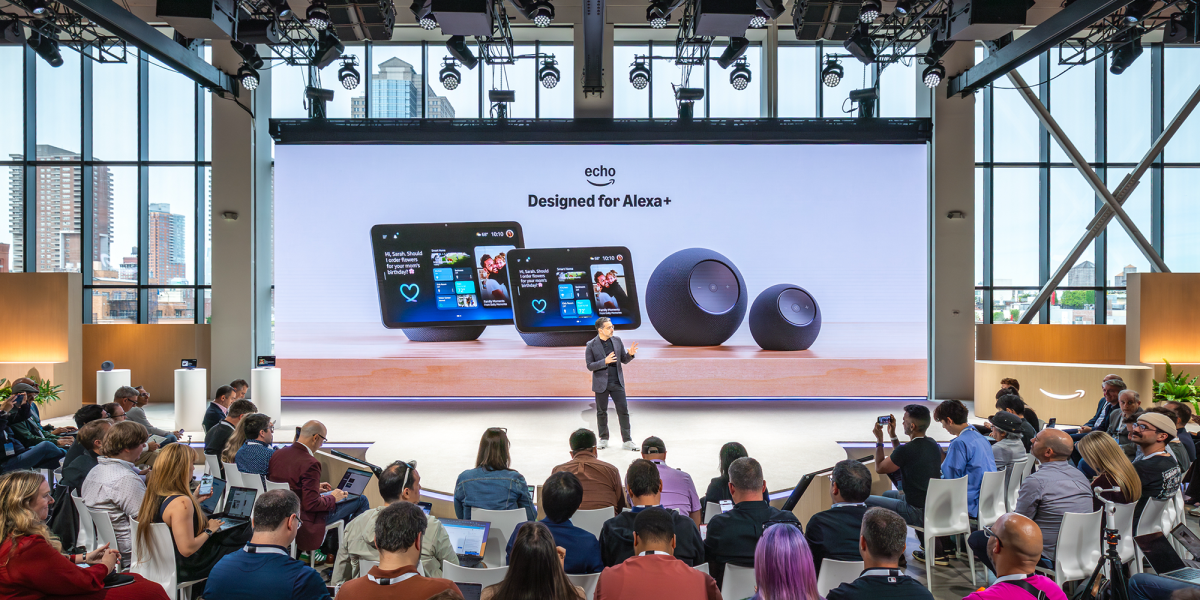
The strategic angle is clear: Amazon wants Alexa to evolve from a voice assistant into an adaptive product interface for every room. With deeper Matter support and upgraded local processing, Echo becomes a control plane for lights, appliances, security devices, and any Matter-certified hardware. This reduces cloud dependency, improves latency, and increases resilience across mixed-vendor ecosystems.
For #hardware makers, this signals a shift: the smart home is consolidating around neutral hubs, and Matter-native interoperability is no longer optional. Amazon is effectively standardizing expectations for setup simplicity, continuity, and cross-brand compatibility.
Related Links:
#Amazon, #Echo, #AI, #AmbientIntelligence, #VoiceAssistant, #SmartHome, #Matter, #Interoperability, #HomeAutomation, #PhysicalAI
2. IoT Tech Expo Global 2025 announced for London
IoT Tech Expo World Series announces IoT Tech Expo Global in London, shaping up to be one of the most consequential IoT gatherings of the year. The event brings together leaders in industrial IoT, edge computing, AI-enabled connectivity, and smart city infrastructure, with a heavy focus on how physical devices integrate into next-generation cloud and data architectures.

What stands out is the cross-disciplinary mix: device manufacturers, telcos, cloud vendors, urban infrastructure operators, and AI application builders sharing a single stage. This mirrors a broader industry pattern: the boundaries between hardware, software, and services are dissolving, and competitive advantage now comes from orchestrating them into unified systems.
Expect significant announcements around edge-AI acceleration, private 5G deployments, and new B2B IoT servitization models, all of which are central themes in the Smart Tangibles transformation.
Related Links:
#SmartTangibles, #IoT, #EdgeComputing, #Private5G, #SmartCities, #ConnectedInfrastructure, #HardwareStrategy, #CloudIntegration, #IndustrialIoT, #DigitalTransformation
3. Yeelight launches Smart Home Hub – a next-generation multi-protocol gateway
Yeelight announced its Smart Home Hub, a unified gateway supporting Wi-Fi, OpenThread, BLE Mesh, Zigbee interoperability, and full Matter certification. With capacity for more than 150 devices, the hub is designed to remove one of the biggest frictions in smart-home adoption: protocol fragmentation.
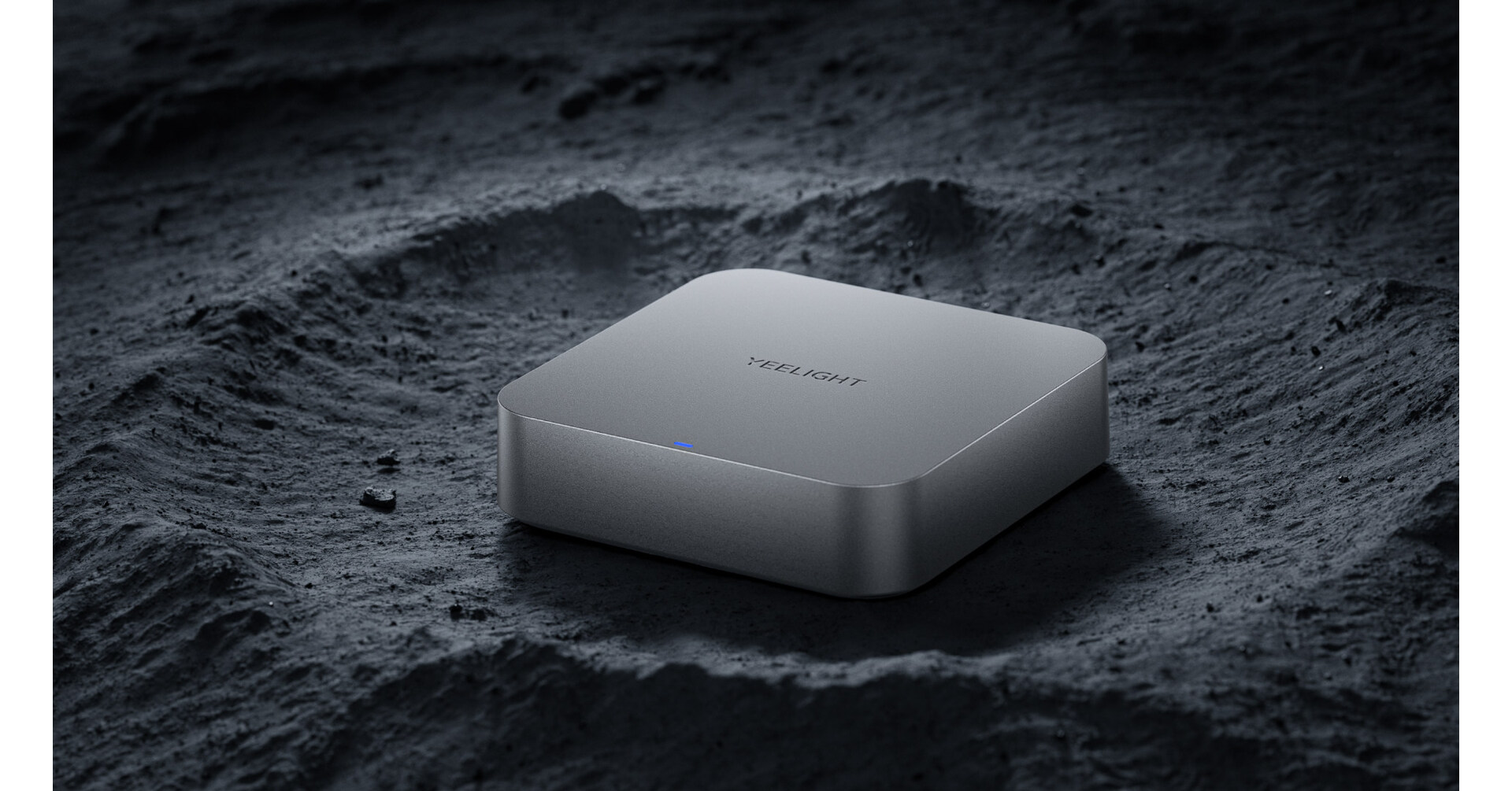
This move reflects a broader industry pivot toward multi-protocol convergence. Instead of forcing users to navigate compatibility matrices, the hub acts as a universal translator that blends sensors, lights, switches, presence detectors, and climate devices into a coherent system.
For manufacturers, the implications are significant. A multi-protocol gateway shifts competition away from connectivity plumbing and toward experience, service layer, and AI-driven features. The hardware becomes simpler – but the ecosystem becomes richer.
Related Links:
#SmartTangibles, #IoT, #EdgeComputing, #Private5G, #SmartCities, #ConnectedInfrastructure, #HardwareStrategy, #CloudIntegration, #IndustrialIoT, #DigitalTransformation
4. AWS IoT Core Device Location integrates with Amazon Sidewalk
AWS released an integration that enables IoT devices to estimate location using Amazon Sidewalk, plus BLE and Wi-Fi signal data – without requiring GPS hardware. This dramatically reduces both bill of materials (BOM) and power consumption, especially for battery-powered sensors, trackers, and wearables.

The deeper shift here is the rise of network-assisted location as a default capability. Instead of embedding expensive GNSS modules, hardware can rely on a nationwide low-bandwidth mesh, opening up new product categories: pet trackers with year-long battery life, low-cost asset tags, elder-care safety wearables, and environmental sensors that can operate for years.
Sidewalk’s expansion shows how cloud providers are increasingly offering off-the-shelf device capabilities, turning once-complex engineering challenges into commoditized services. This is a classic Smart Tangibles pattern: capabilities migrate upward, making hardware cheaper and innovation faster.
Related Links:
#AWS, #IoT, #AmazonSidewalk, #BLE, #WiFi, #LocationEstimation, #BatteryPowered, #Sensors, #Trackers, #Wearables, #NetworkAssistedLocation, #GNSS, #PetTrackers, #AssetTags, #ElderCare, #EnvironmentalSensors, #CloudProviders, #SmartTangibles, #Innovation, #CostReduction
5. The Future of IoT Connectivity and Infrastructure – early themes from IoT Tech Expo
Early signals from the Expo’s agenda highlight strong momentum behind private 5G, satellite–IoT convergence, and ultra-low-power wide-area networks. These technologies are shaping entirely new classes of smart tangibles across mobility, logistics, environmental sensing, and distributed industrial systems.
News In Detail:
Amazon updates Alexa and Echo with expanded AI and Matter support
Amazon unveiled a new line of Echo devices designed to serve as the ambient, AI-enabled layer of the smart home, blending voice, sensors, and multimodal intelligence into what the company calls “physical AI.”
IoT Tech Expo Global 2025 announced for London
The upcoming IoT Tech Expo Global will bring together leaders in industrial IoT, edge computing, AI-enabled connectivity, and smart city infrastructure. As in past years, the event is expected to set the tone for next-generation device–cloud–app architectures shaping 2025–2026 hardware strategy.

Yeelight launches Smart Home Hub – a next-generation multi-protocol gateway
Yeelight unveiled a unified smart-home gateway supporting Wi-Fi, OpenThread, BLE Mesh, and full Matter certification, capable of managing over 150 devices. The Hub reflects an industry-wide movement toward multi-protocol, multi-ecosystem consolidation that reduces setup friction and strengthens smart-home UX.
AWS IoT Core Device Location integrates with Amazon Sidewalk
AWS introduced a location-estimation service that allows IoT devices to determine their position using Sidewalk plus BLE/Wi-Fi, without requiring dedicated GPS hardware. This reduces BOM complexity and power consumption, making it easier to build affordable, long-lived smart trackers and location-aware sensors.

The Future of IoT Connectivity and Infrastructure – early themes from IoT Tech Expo
Scanning the early agenda for the Expo reveals three strong connectivity vectors shaping next-generation smart hardware:
• private 5G networks powering secure industrial autonomy,
• satellite + IoT convergence enabling remote sensing and logistics intelligence,
• ultra-low-power LPWAN technologies extending device lifetimes to 5–10 years.
Each of these reduces constraints that historically limited IoT scale. Private 5G brings deterministic performance to factories and logistics hubs. Satellite-IoT blends global reach with real-time telemetry. LPWAN architectures make maintenance-free deployments a reality.

Together, they set the stage for planet-scale smart tangibles: devices that operate anywhere, last longer, integrate faster, and provide continuous data streams into cloud platforms. This is where the next competitive moats will form – not in the device itself, but in the service layers built on top of persistent connectivity.
Related Links:
#SmartTangibles #IoT #LPWAN #SatelliteIoT #Private5G #Connectivity #SmartInfrastructure #IndustrialIoT #Hardware #CloudServices
This news digest is compiled weekly. Register here to receive it in your inbox.

Comments